If you’ve spent weeks—or even months—applying messy gels, sticking on medicated plasters, or using “freeze-at-home” kits on a stubborn verruca with no luck, you aren’t alone.
At our foot clinic in South Croydon, one of the most common frustrations we hear from patients is: “I’ve tried everything from the chemist, but it just won’t go away.”
While over-the-counter (OTC) treatments are popular, they often fall short of a permanent cure. Understanding why these methods fail is the first step toward getting your feet back to full health.
What Exactly Is a Verruca?
Before looking at the “why,” we need to understand the “what.” A verruca is a wart caused by the Human Papilloma Virus (HPV). It lives in the top layers of your skin (the epidermis) and survives by “hiding” from your immune system. Unlike a corn or a callus, which are caused by pressure, a verruca is an active viral infection.
3 Reasons Your At-Home Treatment Isn’t Working
1. Insufficient Strength To protect the general public, OTC acid treatments are relatively weak. While they can work on very small, new warts, they often lack the “punch” needed to penetrate the thick, protective skin on the sole of the foot.
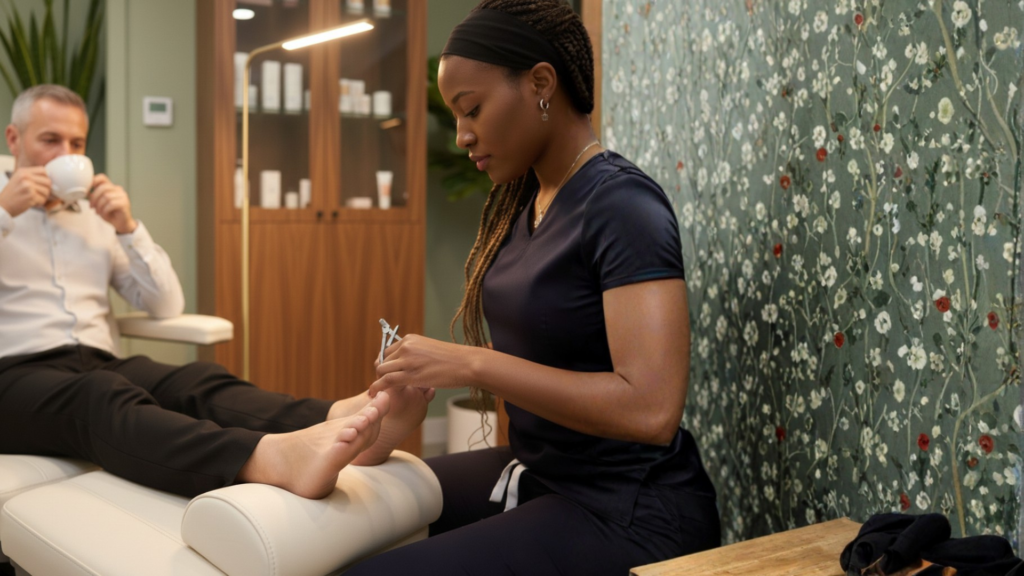
2. The “Shield” of Hard Skin Verrucas often develop a layer of overlying hard skin (callus) as a protective barrier. If you apply a gel over this hard skin, the medication never actually reaches the virus. A professional chiropodist will debride (painlessly pare down) this skin first, ensuring the treatment reaches the target.
3. Home Freezing Isn’t Cold Enough. Professional cryotherapy used in a podiatry setting reaches much lower temperatures than pressurised cans sold in shops. To kill the viral cells, the “freeze” needs to be deep and controlled—something home kits simply cannot replicate.
How to Tell It’s a Verruca (and Not a Corn)
It is easy to mistake a verruca for a corn, but the treatments are vastly different. Look for these signs:
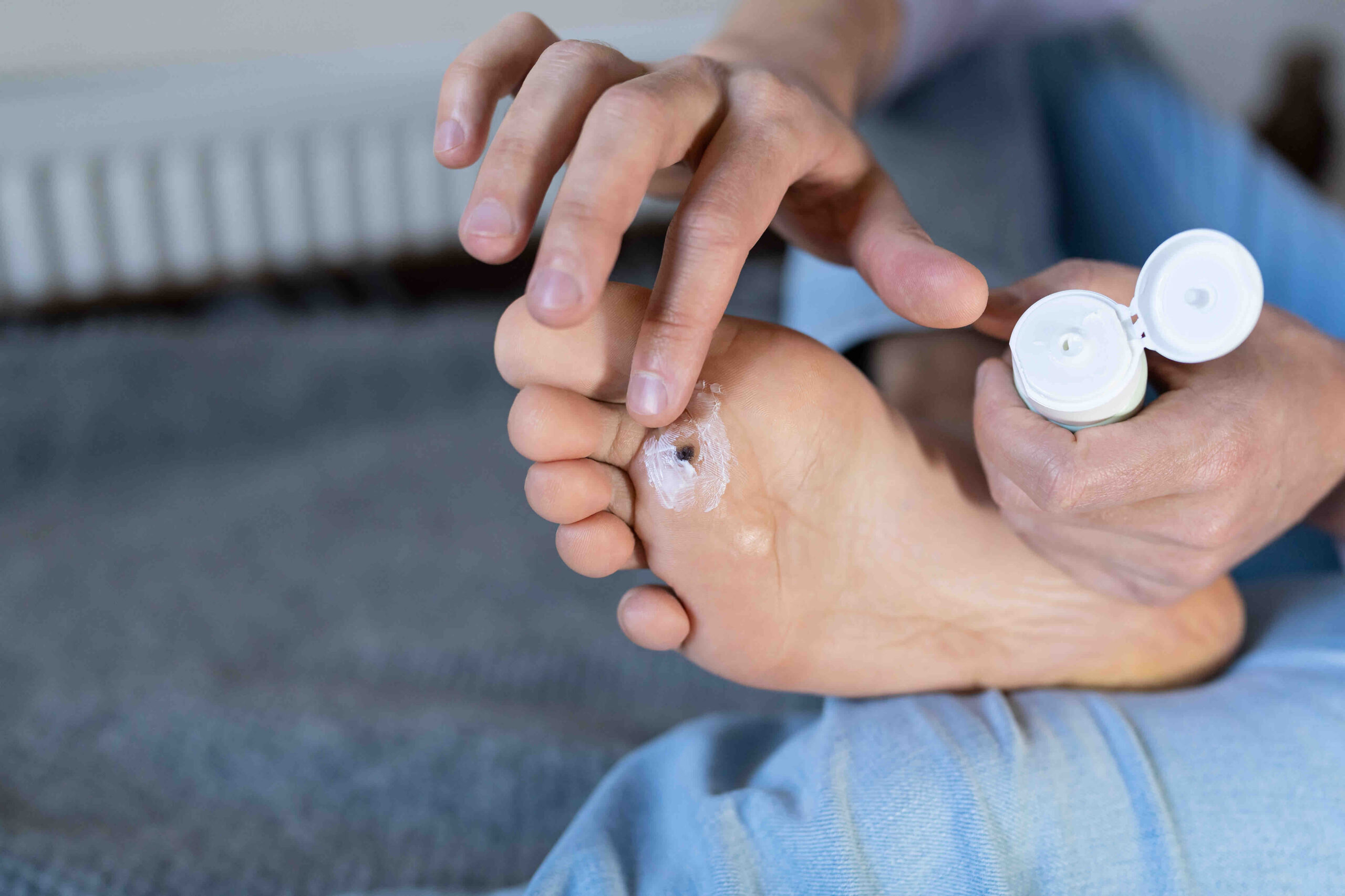
- Small Black Dots: These are tiny clotted blood vessels, not “seeds.”
- Pain on Pinching: Verrucas usually hurt more when squeezed from the sides than when pressed directly.
- Interrupted Skin Lines: If the natural “fingerprint” lines of your foot stop at the growth, it’s likely a verruca.
Professional Foot Care in South Croydon
At Medical Massage Detox (MMD), we provide expert foot health assessments to stop the cycle of failed DIY treatments. Our podiatrists use clinical-grade treatments that stimulate your body’s immune response to recognise and destroy the virus for good.
If you are tired of the “apply, peel, repeat” cycle, it’s time to see a professional. We serve patients across South Croydon, Purley, and the surrounding areas, providing a sterile, expert environment for effective verruca removal.